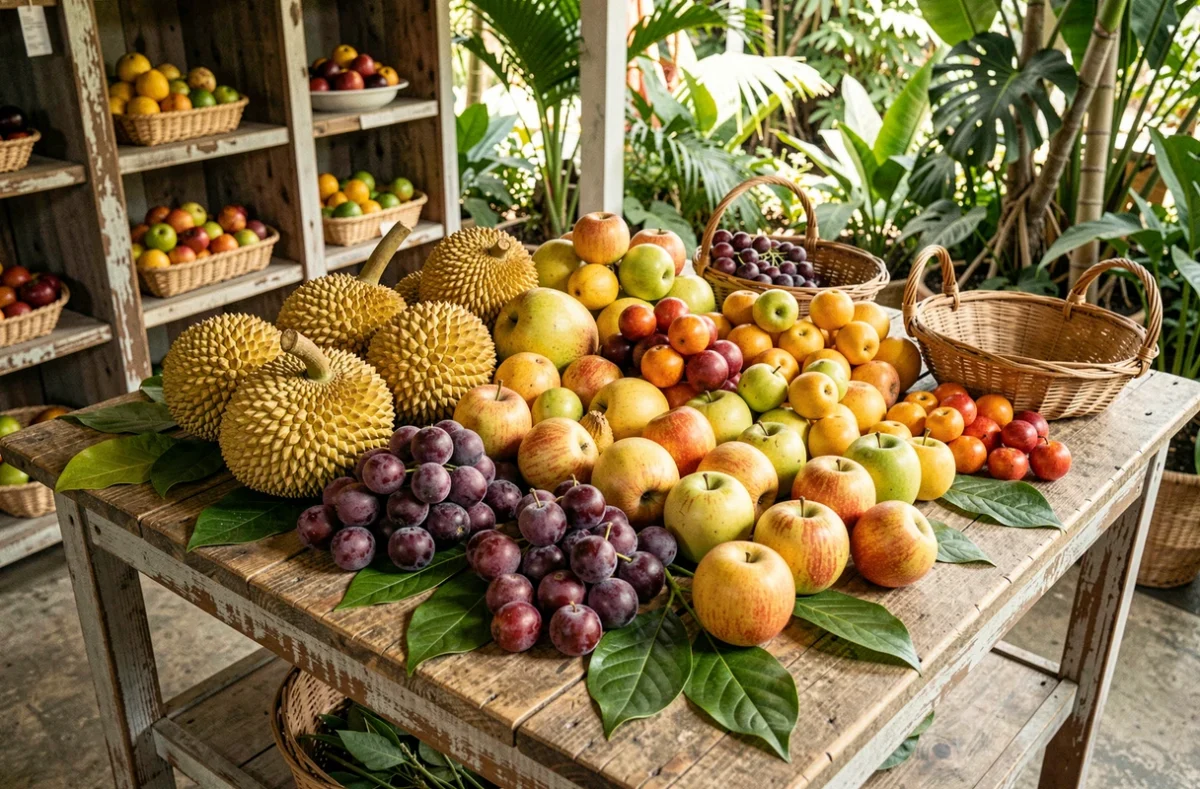
Among the fruits starting with the letter J, how many are actually available in France, fresh or processed? Most lists compile botanical names without specifying whether the fruit can be found on a stall or only in a tropical greenhouse. This ranking sorts ten J fruits according to their taste interest and their concrete availability for a French consumer.
1. Jaboticaba, the Brazilian grape that grows on the trunk
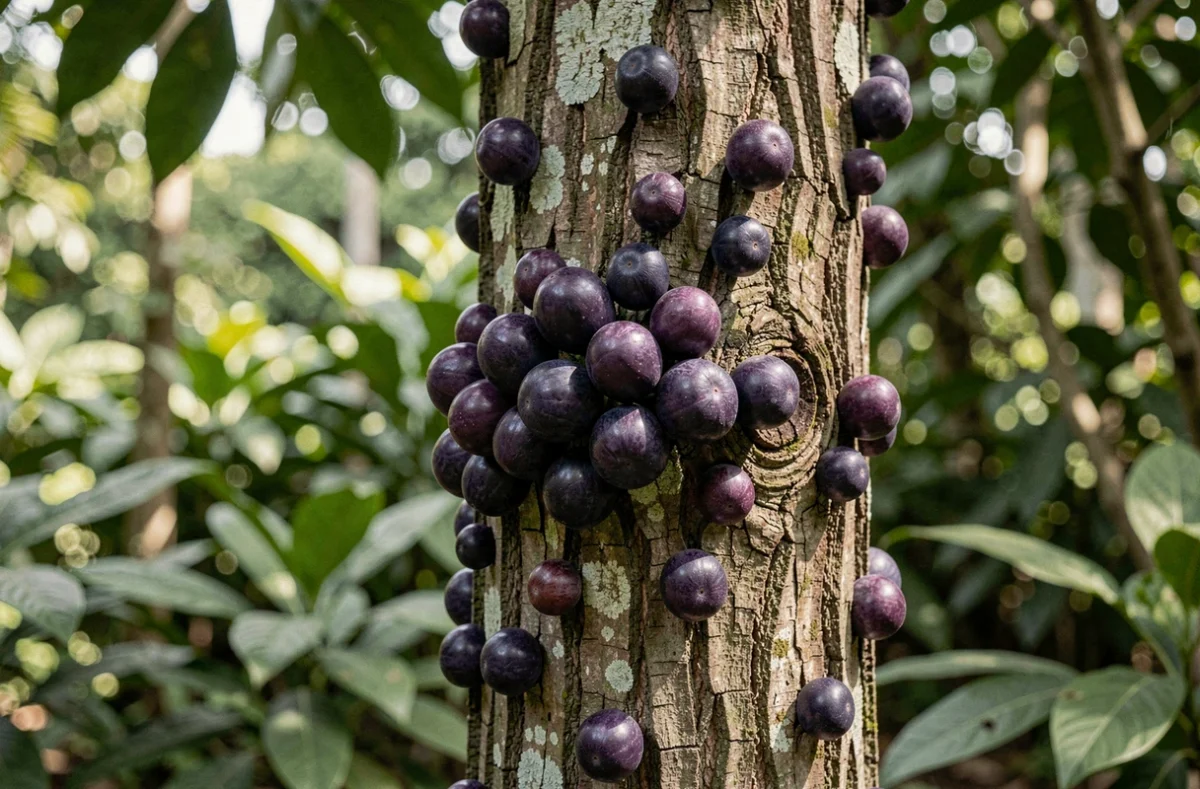
The jaboticaba belongs to the genus Plinia, in the Myrtaceae family. It has no botanical relation to grapes, despite the nickname “Brazilian grape.” Its dark purple berries grow directly on the trunk and large branches, a phenomenon called cauliflory.
The white flesh is sweet and slightly tangy. The fruit deteriorates very quickly after harvesting, making it nearly impossible to find fresh in France. It can be found in the form of jam, liqueur, or frozen pulp in some Brazilian grocery stores in Paris and Lyon.
Among the J fruits to discover, the jaboticaba remains the most fascinating botanically, even though tasting it fresh requires a trip to Brazil.
2. Jujube, the Chinese date rich in vitamin C
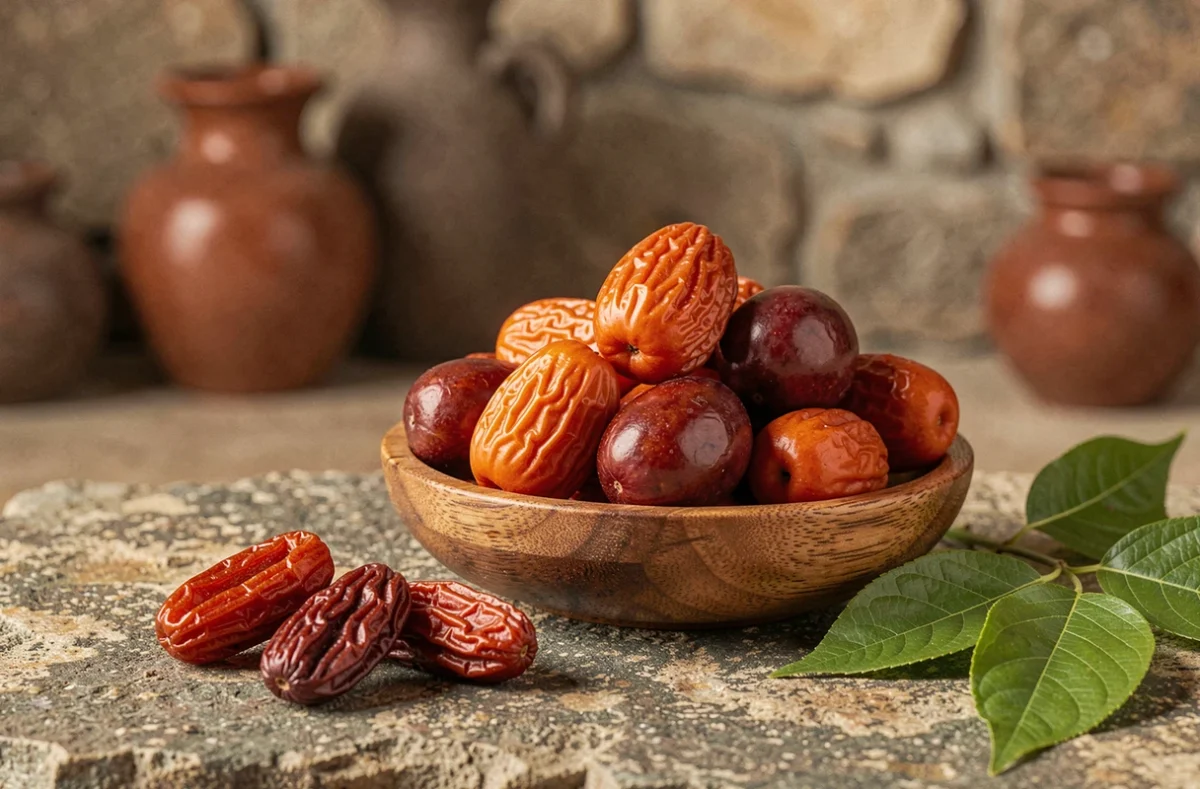
The jujube (Ziziphus jujuba) is a small oval red-brown fruit. Fresh, its skin is crunchy and its flesh resembles that of an apple. Dried, it takes on the soft texture of a date, hence its nickname “Chinese date.”
Dried jujube is easily found in France, in Asian grocery stores and some organic shops. Fresh fruit is rarer, but a few producers in the south of France cultivate the jujube tree, which is suited to Mediterranean climates. The season extends from late September to November.
Rich in fiber and vitamin C, jujube can be consumed raw, as tea, or incorporated into pastries.
3. Jackfruit, the giant tropical fruit with dual use
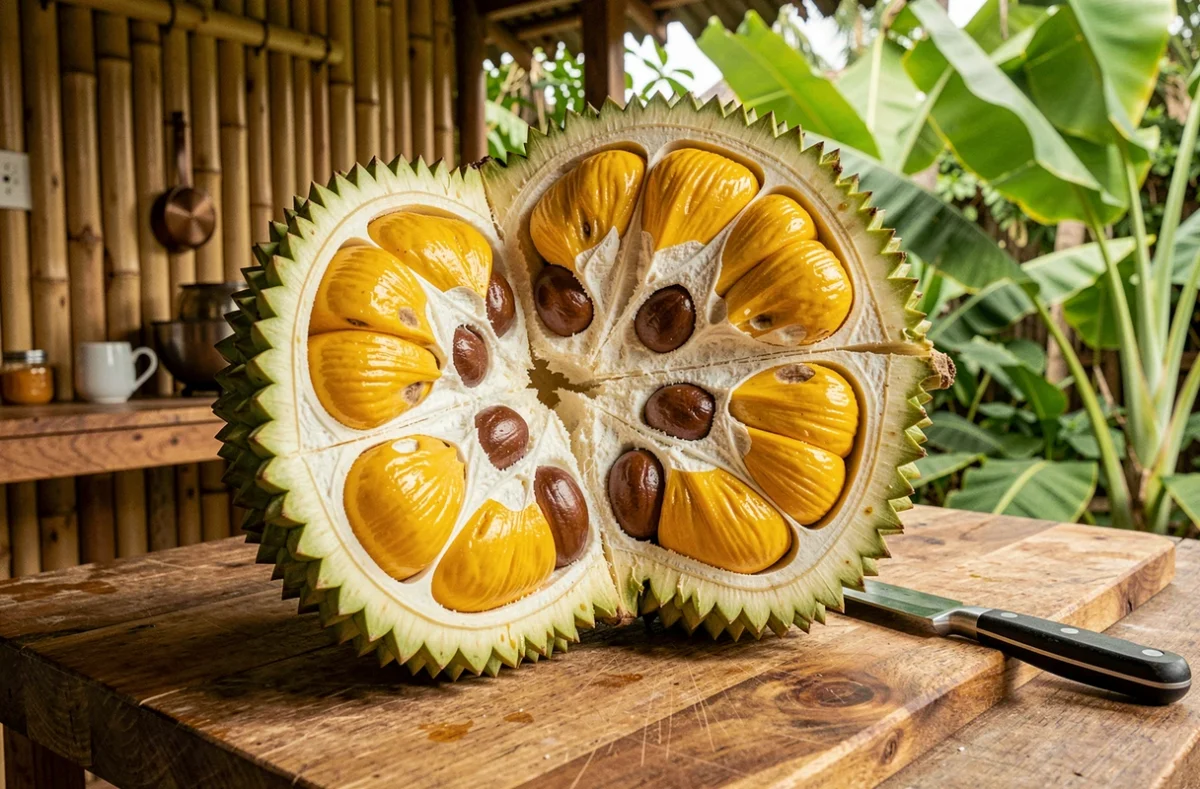
The jackfruit is the largest fruit growing on a tree. Its fibrous yellow flesh, when ripe, offers a sweet taste reminiscent of pineapple and mango.
The jackfruit is notable for its dual culinary use. Its ripe segments can be enjoyed as a fruit. In contrast, the young, still green pieces are cooked in savory preparations: curries, veggie tacos, stews. Its seeds are also edible once cooked.
In France, it can be found canned or frozen in Asian grocery stores and specialty plant-based food shops. The whole fresh fruit occasionally appears in supermarkets in the Paris region.
4. Red jambose, the crunchy water apple
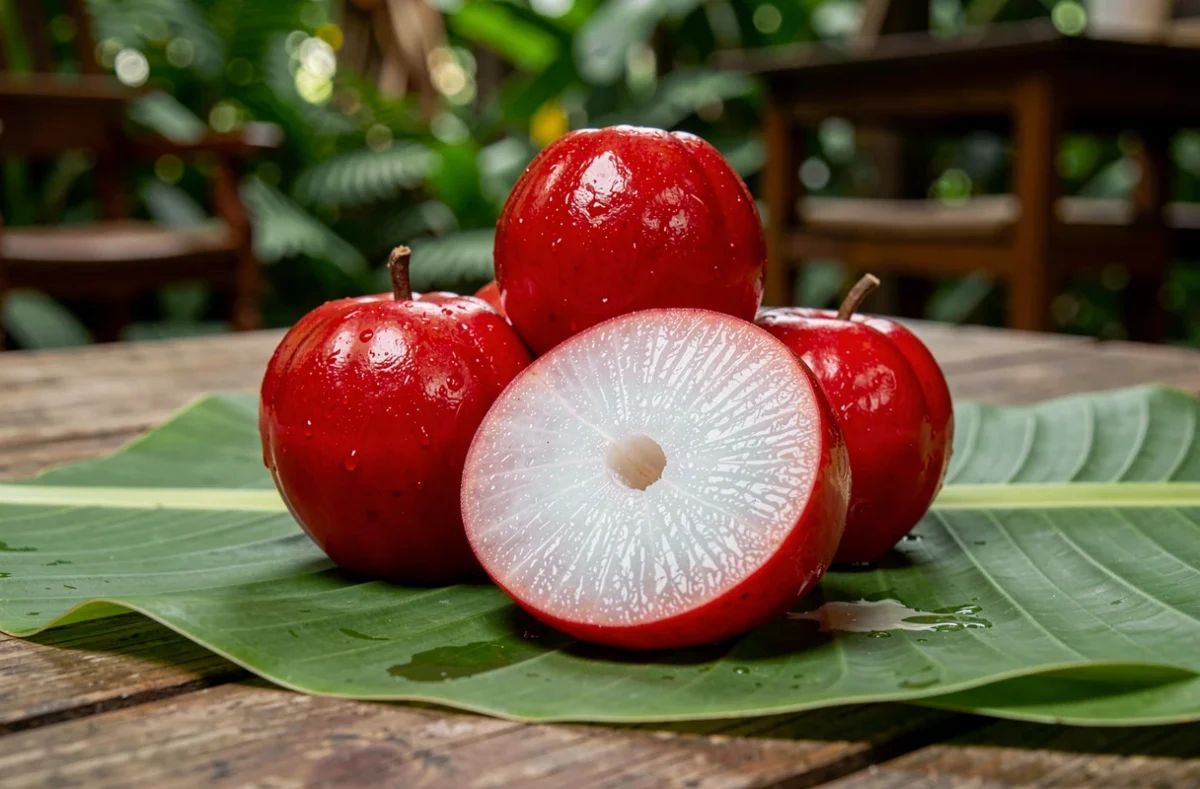
The red jambose (Syzygium malaccense) belongs to the Myrtaceae family, like the jaboticaba. Its shape resembles a small pear, its bright red skin concealing white, watery, and refreshing flesh.
The taste is subtle, slightly floral, with a very crunchy texture. This tropical fruit does not withstand long-distance transport. The red jambose remains unavailable fresh in mainland France, but it can be tasted in Guadeloupe, Martinique, or Réunion, where it grows naturally.
5. Jubaea chilensis, the miniature coconut from Chile
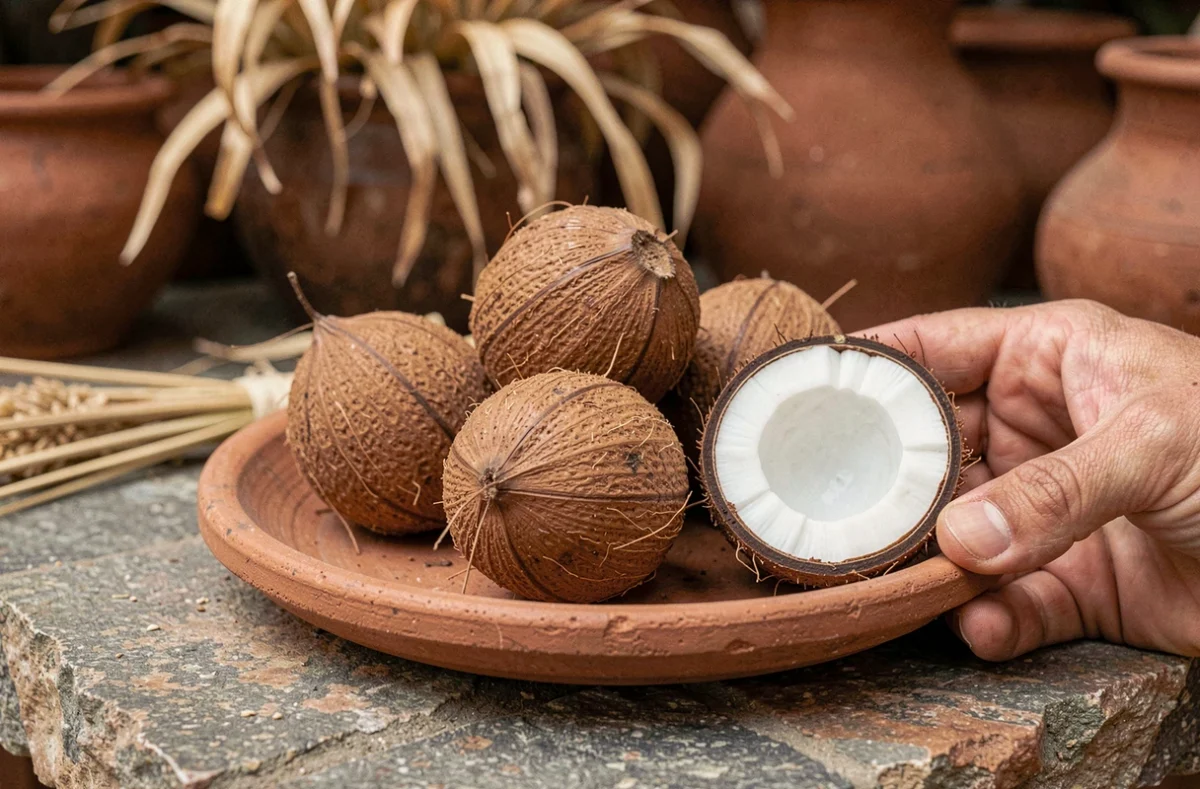
The Jubaea chilensis is a palm tree native to Chile. It produces small round nuts whose flesh resembles coconut, but is more delicate. They are sometimes called “coquitos” or Chilean coconuts.
This palm grows slowly and remains little exploited commercially. In France, a few ornamental specimens exist on the Côte d’Azur, but its fruits are not marketed in the French market. Enthusiasts can sometimes find them in networks of rare plant collectors.
6. Juglans regia, the common walnut under its Latin name
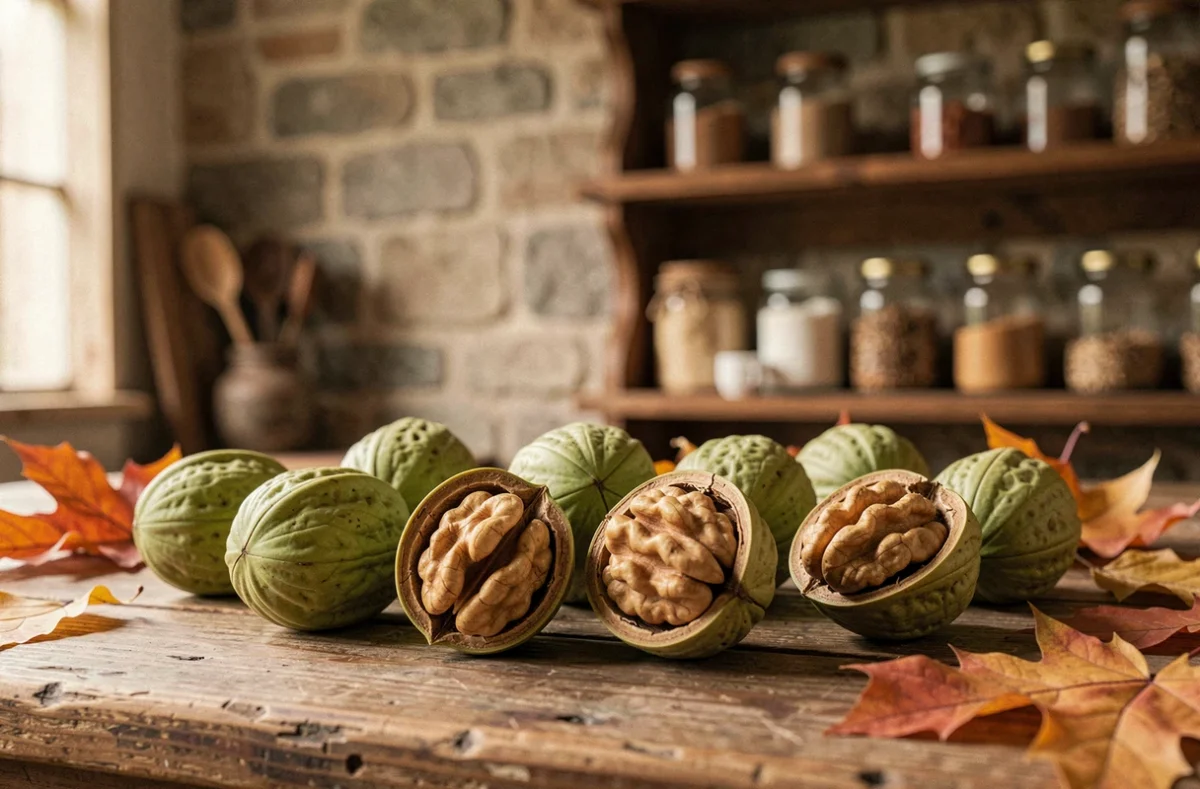
Juglans regia simply refers to the common walnut. The walnut is the most consumed J fruit in France. Périgord and Dauphiné concentrate national production.
Rich in fiber and fatty acids, the walnut can be consumed fresh from September or dry all year round. It is the only fruit on this list that poses no availability issues:
- Fresh walnuts in season, from September to November, at markets and supermarkets
- Dry walnuts available all year round, in bulk or packaged
- Walnut oil, kernels, walnut powder in gourmet grocery aisles
7. Jatropha, a toxic fruit not to be consumed
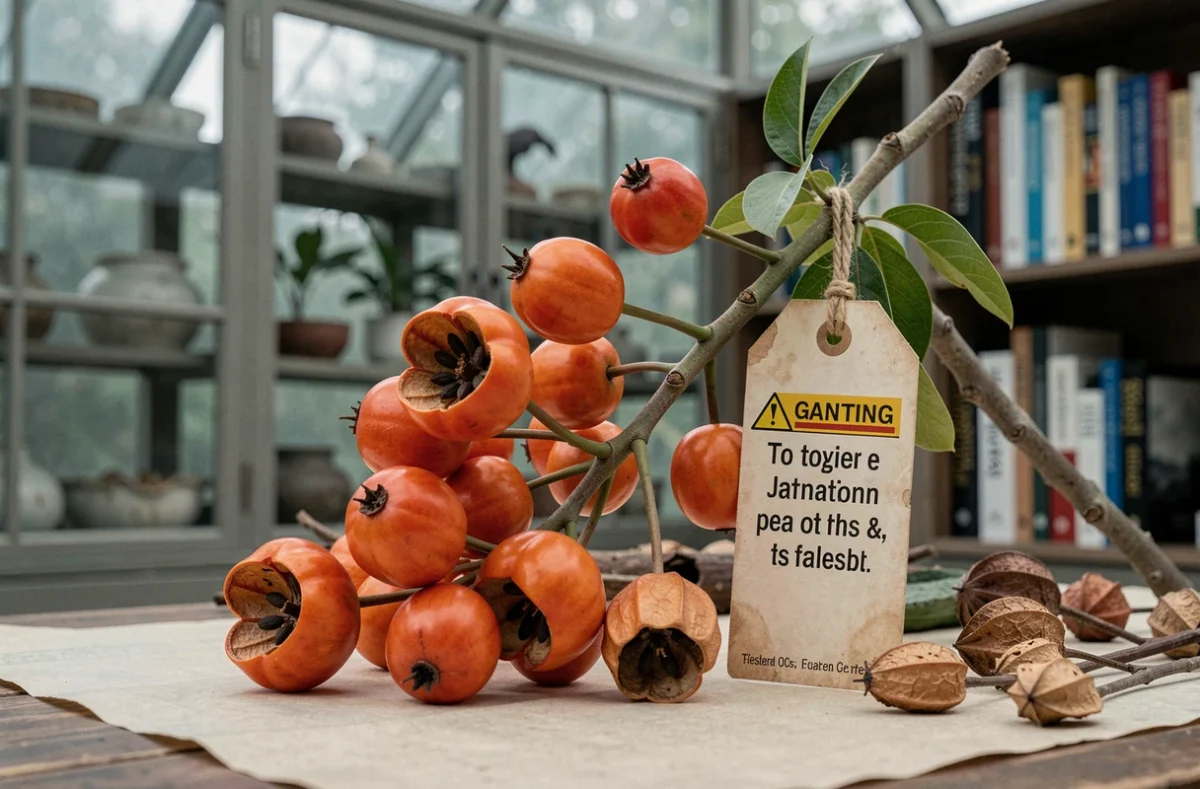
Jatropha (Jatropha curcas) appears in some lists of J fruits, but it is important to clarify one crucial point: the fruit of jatropha is toxic to humans. Its seeds contain dangerous purgative substances.
The plant is cultivated in tropical areas for biofuel production, not for food. Its inclusion here is solely to indicate that it should not be confused with an edible fruit.
8. Jambolan, the astringent purple fruit
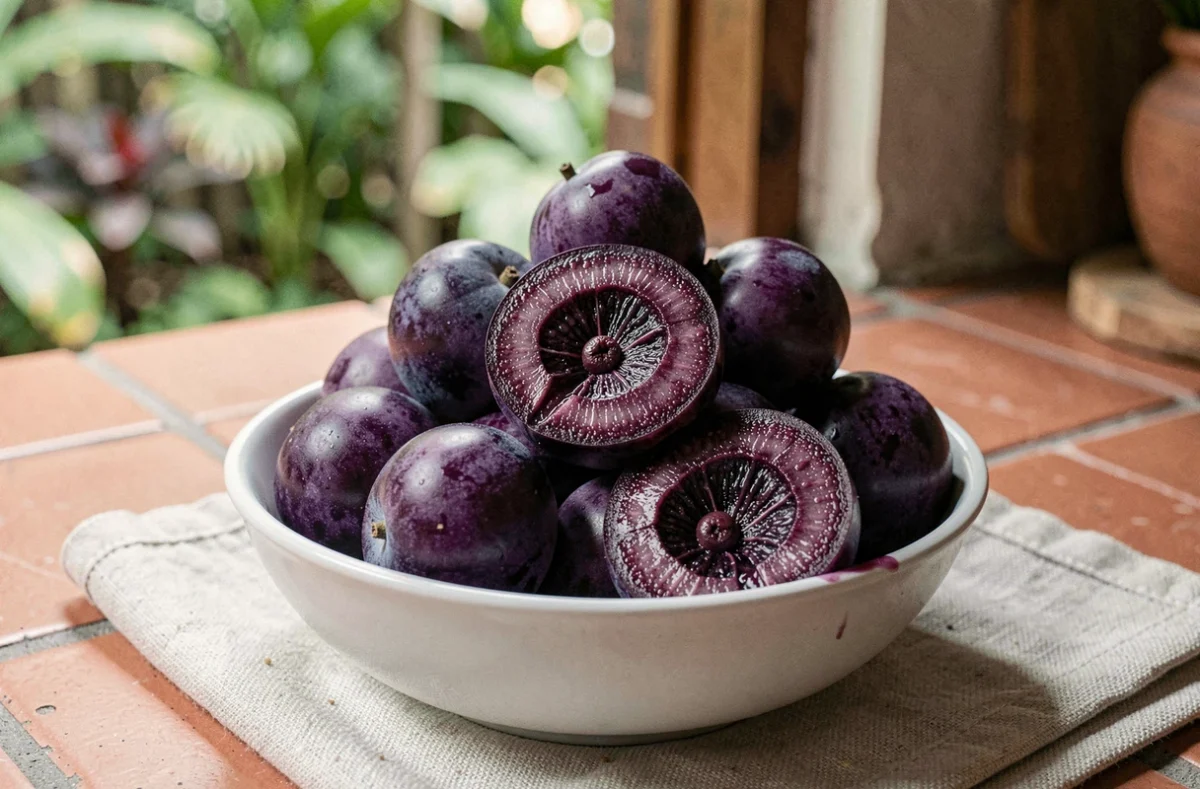
The jambolan (Syzygium cumini), also called jamun, produces dark purple berries with juicy flesh. The taste is sweet at first, then distinctly astringent. It stains the tongue purple, making it a taste curiosity.
This Indian fruit is not distributed fresh in mainland France. It can sometimes be found in juice or powder form in Indian grocery stores. Its frequent confusion with the red jambose deserves attention: these two fruits of the genus Syzygium offer very different taste experiences, one watery and sweet, the other astringent and staining.
9. Jicama, the tuber that is eaten like a fruit
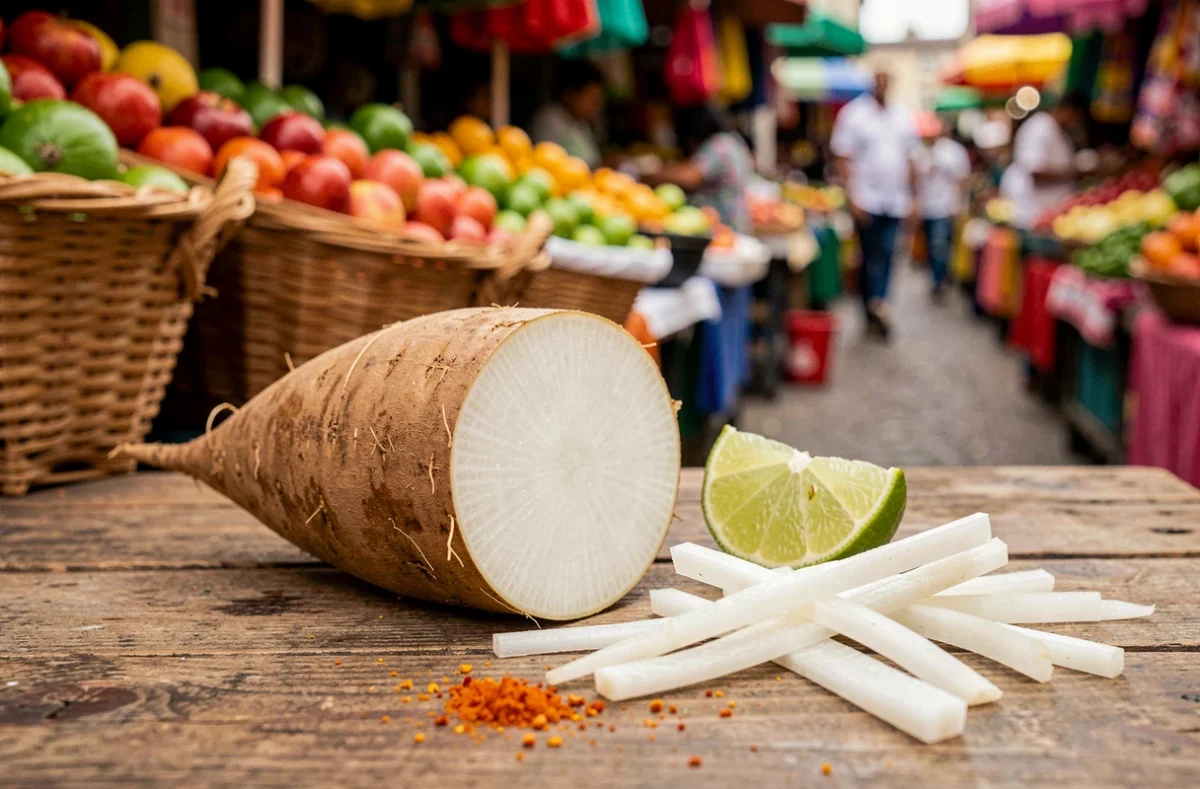
The jicama (Pachyrhizus erosus) is botanically a root vegetable, but its crunchy and sweet white flesh makes it similar to a snack fruit. In Mexico, it is enjoyed raw with lime and chili.
In France, jicama can be found in a few Latin American grocery stores, especially in Paris. Its thick skin peels off easily. The flesh, rich in fiber and low in calories, remains crunchy even after cutting. It is an interesting alternative to apples for salads and snacks.
10. Jonagold, the sweet-tart hybrid apple
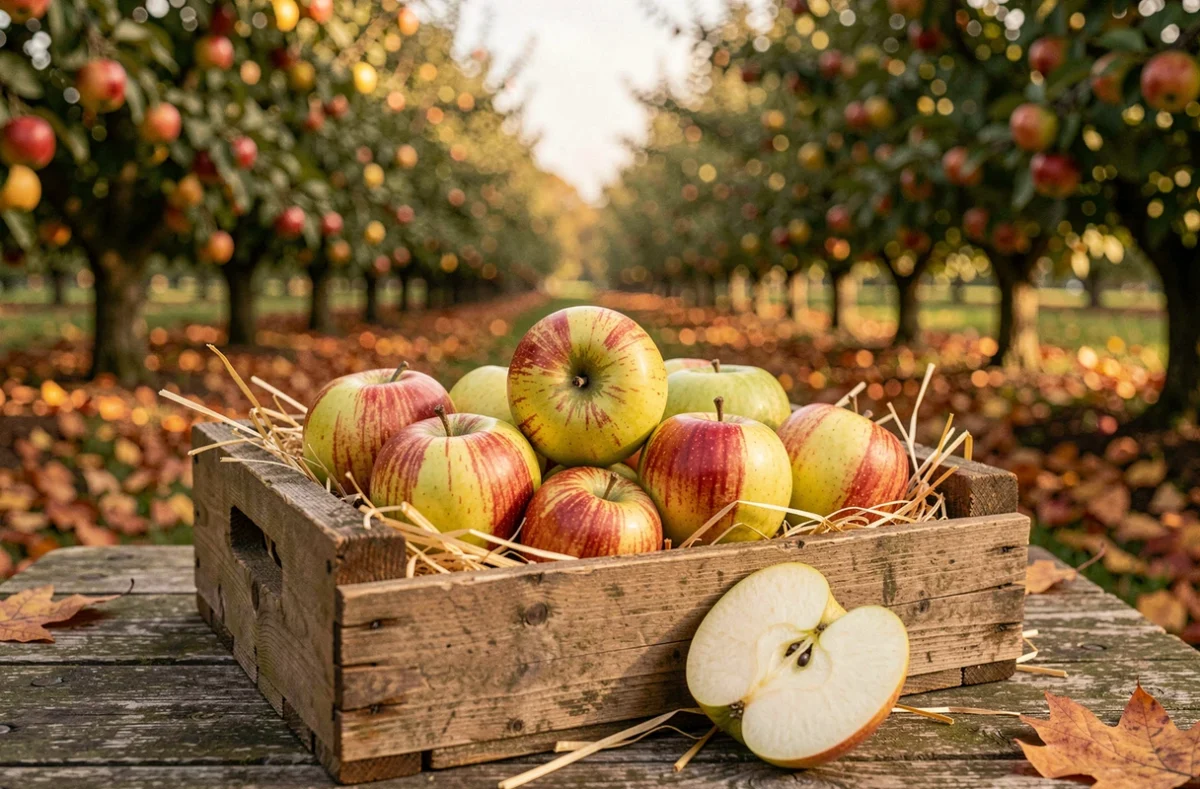
The Jonagold is a cross between the Jonathan and Golden Delicious varieties. Its red skin streaked with yellow conceals juicy flesh that is both sweet and slightly tart.
It is the easiest J fruit to find in France alongside the walnut. Available from September to March in most supermarkets, the Jonagold is suitable for both raw tasting and cooking in pies or compotes.
- Firm flesh that holds up well when cooked, ideal for pies
- Balanced flavor between sweetness and acidity, suitable for fruit salads
- Good storage in the refrigerator for several weeks
Of the ten J fruits listed here, only the walnut (Juglans regia), the Jonagold, and the dried jujube can be found without difficulty in France. Canned jackfruit completes the picture for plant-based cooking enthusiasts. The others remain discoveries to be made on-site, in their regions of origin, or through specialty grocery stores.