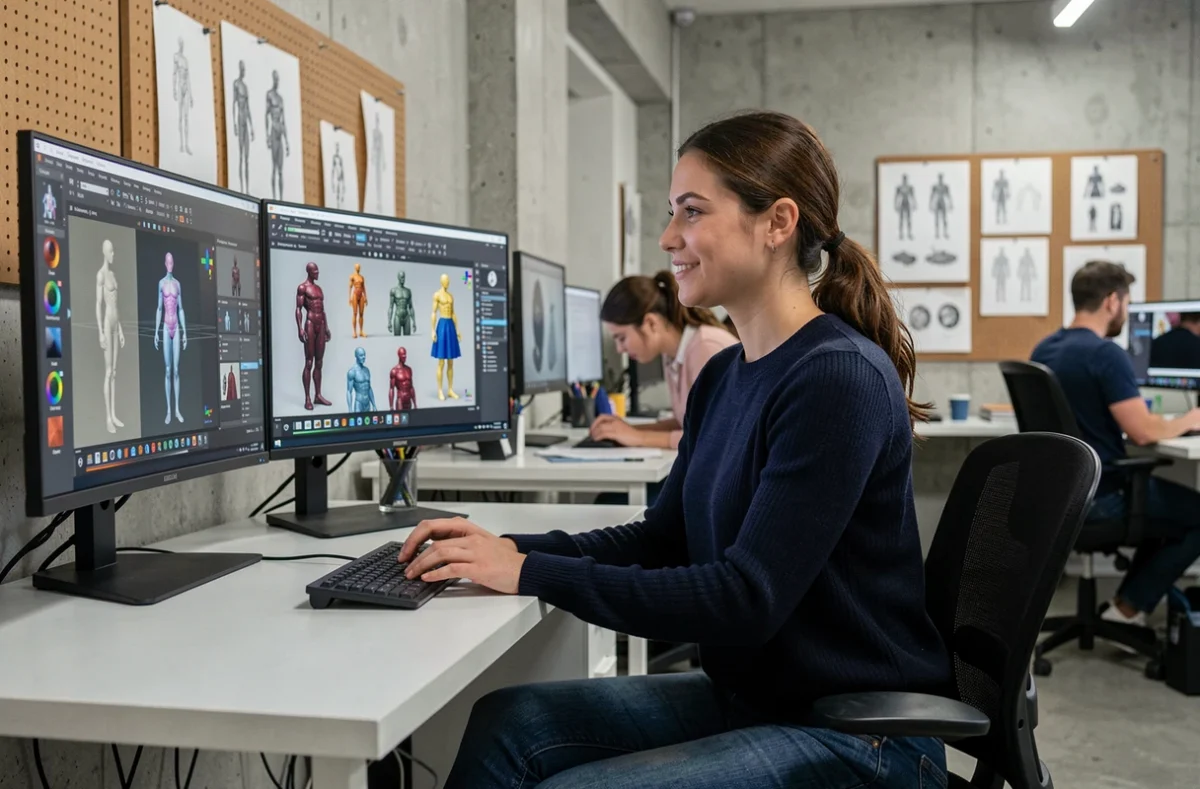
On a project for an animated series, a 3D animator is rarely asked to simply “animate a character.” The brief comes with constraints for real-time rendering, a pipeline under Unreal Engine, and delivery compatible with VR headsets. This gap between initial training and the reality of current productions redefines the professional trajectories available after a course in 3D animation.
Technical artist: the hybrid role that studios struggle to fill
When a character modeled by a 3D artist crashes the game engine due to an excessive polygon count, it’s the technical artist who steps in. This role, halfway between visual creation and development, involves optimizing assets to run in Unity or Unreal without sacrificing graphic quality.
Specifically, this involves creating internal tools, automation scripts for rigging, and resolving performance bottlenecks. Recent job offers in France explicitly associate animation, prototyping, and game engine skills with this type of position. For a 3D animator trained in modeling software and animation techniques, the transition to this role relies on acquiring lightweight programming skills (Python, engine scripting).
A detailed overview of career opportunities for 3D animators on Emploi Parlons Net outlines the accessible pathways based on the level of training and the targeted sector.
3D Animation for Virtual Reality: Constraints Not Imposed by Cinema
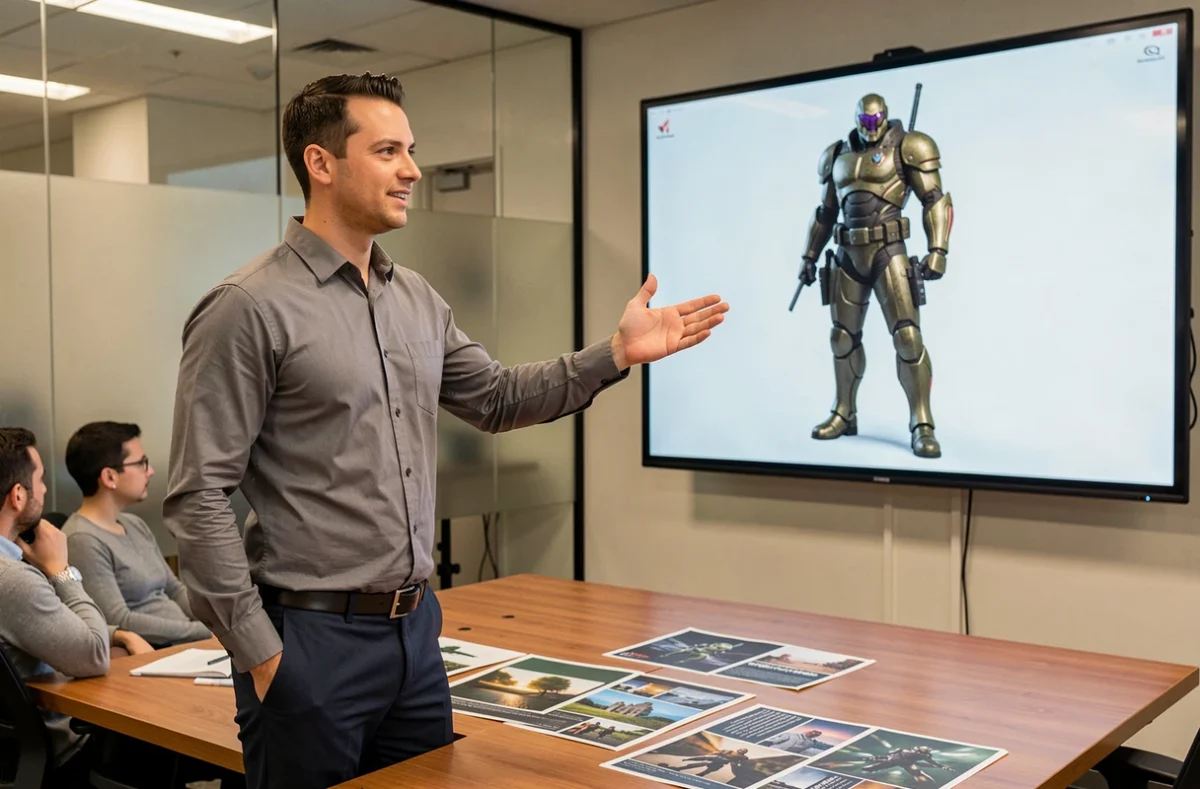
Working on an animated film and producing content for a standalone VR headset is not the same job. In standalone VR, the polygon budget per scene is drastically limited. Lighting must be pre-calculated or simplified, and the display fluidity affects the user’s physical comfort (nausea, visual fatigue).
Studios hiring for immersive experiences seek profiles capable of mastering animation, look development, and the performance constraints specific to real-time engines simultaneously. A recent artistic direction job offer in France explicitly required an understanding of standalone VR, with Unity or Unreal as the primary environment.
For a 3D animator trained on cinema pipelines (Maya, offline rendering), this specialization requires learning real-time workflows. Feedback varies on the difficulty of this transition, but the logic of animation (timing, spacing, weight of movements) remains the same.
Motion Design and News Media: When 3D Animation Exits Entertainment
Newsrooms and communication agencies are hiring profiles that combine 3D animation, compositing, and animated typography. Euronews, for example, published a senior motion designer position requiring proficiency in Blender or Cinema 4D alongside After Effects and video editing skills.
Motion design absorbs an increasing share of 3D skills in sectors far from video games or animated cinema. We produce set designs, animated infographics, and content for social media. The production pace is shorter (a few days per project compared to several months for a film), which changes the way of working.
The required tools reflect this hybridization:
- Blender or Cinema 4D for modeling and animating short 3D sequences
- After Effects for compositing, transitions, and animated typography
- DaVinci Resolve or Premiere Pro for final editing and color grading
- Basic graphic design knowledge (layout, visual hierarchy, typographic choices)
A 3D animator who can also edit and compose their own shots becomes autonomous throughout the entire production chain. This versatile profile is what newsrooms and agencies prioritize in their search.
Artificial Intelligence and Copyright: What Changes for 3D Animators in France
The arrival of generative AI tools in production pipelines raises concrete questions. In France, the legal framework surrounding AI and copyright is evolving, particularly regarding the presumption of exploitation of works used to train models. For a 3D animator, this means two things.
First, studios must document the origin of assets generated or assisted by AI. If a tool produces a texture or a reference pose, traceability becomes a legal issue. Productions that neglect this point expose themselves to legal actions.
Secondly, proficiency with AI tools (texture generation, rigging assistance, keyframe interpolation) becomes an additional recruitment criterion. The animator is not replaced, but they are expected to integrate these tools into their workflow without compromising the project’s intellectual property.
The sought-after skills are organized around two axes:
- Understanding the legal limits of generative AI applied to visual creation
- Ability to use AI as a production accelerator (pre-visualization, generation of variations) while maintaining artistic control
- Active monitoring of regulatory developments in France and Europe
Knowing how to animate is no longer enough; one must also understand the framework in which one produces. Profiles that combine technical animation skills, mastery of real-time engines, and knowledge of the legal issues related to AI position themselves for high-value roles, whether in studios, agencies, or freelance.
The 3D animation market is no longer limited to cinema and video games. The strongest trajectories pass through specialization in a specific niche (VR, technical art, editorial motion design) rather than the accumulation of generic skills. It is this ability to combine know-how that determines access to the highest-paying positions.