
The fashion accessories market is undergoing a transformation that goes far beyond taste. Since the European regulation ESPR came into effect on July 18, 2024, requirements for sustainability, reparability, and traceability are gradually being applied to textiles and clothing. Choosing a bag, a belt, or a scarf is no longer just about aesthetic preference: the regulation is redefining what a durable accessory concretely means.
Digital product passport: what changes for fashion accessories
The European delegated act regarding the digital passport for textile products is expected by 2027. Ultimately, a QR code integrated into the label of a bag or a pair of glasses will provide access to the composition, origin of materials, repair instructions, and end-of-life options.
For consumers, this means direct access to verifiable information before making a purchase. Brands that focus on recycled materials or local manufacturing processes will be able to prove it, while vague claims (“eco-friendly,” “green”) will be regulated by the European directive against greenwashing.
This framework changes the way a wardrobe of accessories is built. Rather than accumulating disposable pieces each season, investing in traceable and repairable accessories becomes a fully-fledged reflex. Field reports still diverge on the speed of adoption by small brands, but the direction is set.
By exploring the collections offered on the Accessoires Mode website, one can gauge the diversity of pieces available to create a coherent wardrobe without multiplying impulsive purchases.

Trendy autumn-winter accessories: focusing on longevity rather than volume
Seasonal trends continue to dictate certain codes (autumn colors, thick textures for winter, floral prints in spring). The difference, for a few seasons now, lies in how these trends align with sustainability.
Pieces that last through multiple seasons
A scarf made from natural fibers, a belt made from vegetable-tanned leather, or a structured bag with reinforced seams share a common point: their cost per use decreases over time. An accessory worn two hundred times costs less than an accessory worn five times, regardless of the initial purchase price.
Accessories that transcend seasons often exhibit these characteristics:
- Materials with identifiable compositions (linen, wool, full-grain leather) rather than synthetic blends without precise labeling
- Replaceable fastening systems (belt buckles, bag clasps) that extend the lifespan of the piece
- Neutral or deep shades that fit into multiple outfit styles without relying on a single seasonal trend
The mistake of the total seasonal look
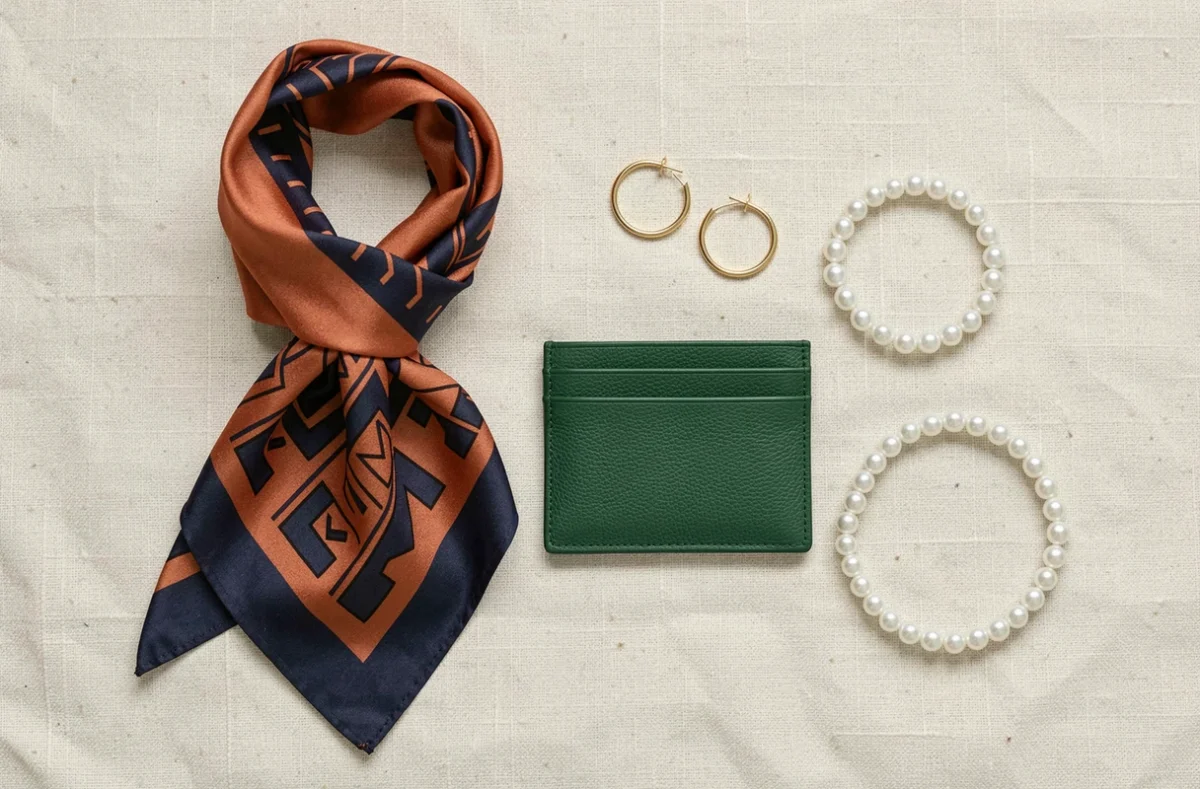
<p.Coordinating a bag, a hat, jewelry, and a scarf in the same color palette creates a costume effect rather than a personal style. Limiting accessories to two or three pieces maximum per outfit allows the silhouette to breathe and avoids visual overload.
The available data does not allow for precise quantification of the environmental impact of each category of accessory. However, the European ban on the destruction of unsold clothing, effective since July 19, 2026, pushes brands to produce in more adjusted quantities, which mechanically reduces the supply of low-quality pieces intended to be discounted and then destroyed.
Second-hand and repair: an underestimated style lever
The second-hand market for luxury and mid-range accessories is experiencing sustained growth. Beyond the budget argument, buying a second-hand bag or piece of jewelry allows access to items that are no longer produced, enhancing the uniqueness of the look.
Repairing extends the lifespan of an accessory by several years. Resoling shoes, replacing the lining of a bag, adjusting a bracelet: these technical gestures, long reserved for high-end pieces, are becoming more accessible with the emergence of specialized platforms and local workshops.
A few points to check before a second-hand purchase:
- The condition of the seams and metal finishes, which are the first indicators of real wear
- The presence of a certificate of authenticity or a serial number for branded pieces
- The possibility of having the piece repaired locally if an element shows signs of fatigue
European regulation and fashion accessory choices: concrete guidelines
The ESPR regulation and its implementing texts outline a framework that consumers can benefit from right now, without waiting for regulatory deadlines.
Prioritizing brands that already publish the detailed composition of their products is anticipating the digital passport. Checking environmental claims displayed in stores or online is applying the spirit of the directive against greenwashing even before its full deployment.
Choosing an accessory with informed knowledge protects both style and budget. A scarf whose origin is known is worn with more conviction than an anonymous piece. A repairable belt doesn’t end up at the bottom of a drawer after a broken buckle.
The fashion of accessories has never been so regulated by law, and this constraint produces an unexpected effect: it values well-designed pieces and penalizes overproduction. For those interested in style as much as sustainability, the current regulatory context makes it easier to identify good choices.