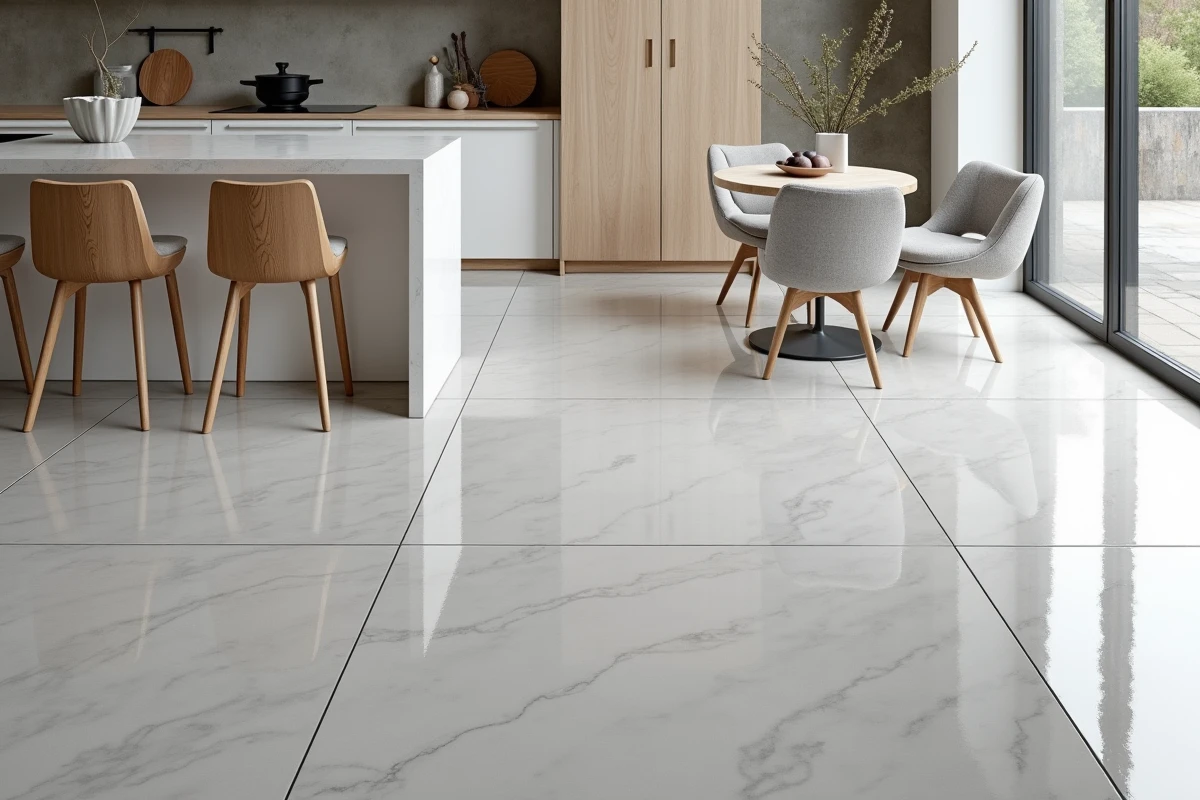
Glossy gray tiles and cement tiles share a rare quality: they transform a floor into a fully-fledged decorative element. Their coexistence in the same project raises technical questions that inspiration catalogs do not always address. Slip resistance rating, surface treatment, choice between genuine cement tiles and imitation porcelain stoneware: these decisions affect the durability of the floor as much as its visual appeal.
Glossy finish on gray porcelain stoneware: the slip hazard
Gray tiles with a polished mirror finish are appealing for their ability to reflect light and visually enlarge a room. The downside has been known to tilers for a few years: very glossy surfaces multiply footprints, droplets, and dust, especially in entryways and kitchens.
According to the 2024 report from the CSTB on interior coverings, very glossy gray tiles are increasingly specified with a minimum R9 or R10 slip resistance rating in residential living spaces. This tightening of recommendations follows feedback on the slip risk of mirror finishes starting in 2023.
Several European manufacturers, including Marazzi and Porcelanosa in their 2025 catalogs, now offer ranges of glossy gray porcelain stoneware with anti-mark surfaces. These oleophobic and hydrophobic treatments applied in the factory reduce the visibility of marks. If you are considering a floor with glossy gray tiles and cement tiles, checking for the presence of this treatment on the product technical sheet can prevent many disappointments in use.
A gloss tile without an anti-mark treatment in an open kitchen becomes a daily maintenance chore. Field reports vary on this point: some installers believe that the treatment loses effectiveness after a few years, while others think that appropriate cleaning (without acidic products) is sufficient to preserve it.
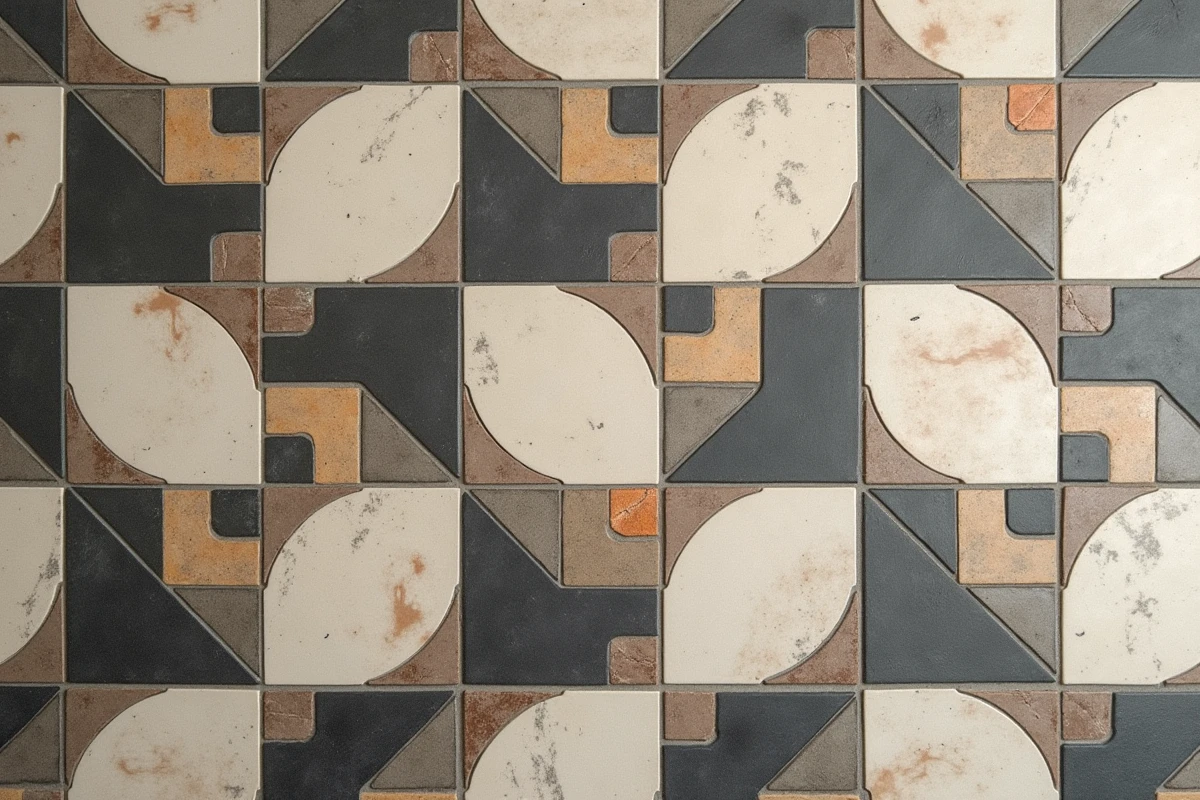
Genuine cement tile or imitation porcelain stoneware: a technical choice before being aesthetic
Cement tiles are made from mass-colored cement, compressed, and then naturally dried without firing. Their surface is porous. They absorb stains, react to household acids, and require regular waterproofing treatment. This is not tile in the strict sense, and this distinction has direct consequences on installation and maintenance.
According to the 2024 data from the concrete and decorative tile sector presented at the Maison&Objet fair, genuine cement tiles are increasingly reserved for small surfaces: thresholds, decorative floor mats, shower stalls, toilets. For larger rooms (living rooms, open kitchens), porcelain stoneware imitations take precedence.
The reasons are technical:
- The weight of a genuine cement tile is significantly higher than that of a porcelain stoneware tile of the same size, which can impose constraints on certain floors.
- The porosity of cement exposes the surface to stains from oil, wine, or vinegar if the protective treatment is not renewed.
- Project managers and design offices observe fewer issues related to stains and moisture with porcelain stoneware imitations, which offer much higher chemical resistance.
Porcelain stoneware that mimics cement tiles reproduces retro, geometric, or floral patterns with a fidelity that has greatly improved. However, it does not have the depth of color or the natural patina that a genuine cement tile develops over time. This compromise between practicality and authenticity remains a personal choice.
Combining glossy gray and cement patterns: effective tiling rules
The mix of glossy gray tiles and patterned cement tiles in the same space is a strong trend, but its success depends on the tiling layout. A floor entirely covered with patterns visually saturates the room. A 100% glossy gray floor can appear cold and monotonous.
The most common technique is to create a cement tile rug in the center of an area (under a table, in front of a countertop, in an entryway) and to border this rug with solid gray tiles. This method delineates spaces without partitions, which works particularly well in kitchens open to the living area.
To ensure a clean junction, the 2024 practical guide from CAPEB reminds us that the thickness of the two coverings must be identical or compensated by localized leveling. A genuine cement tile and a porcelain stoneware tile do not necessarily have the same thickness. A difference of a few millimeters creates an unsightly step and a tripping hazard.
Format also plays a role. Classic cement tiles often measure 20×20 cm. A large format glossy gray porcelain stoneware (60×60 or 60×120) accentuates the scale contrast and gives more presence to the decorative rug. Combining two similar formats (20×20 and 30×30) produces a more discreet effect, sometimes a bit confusing.
Glossy gray tiles in bathrooms and showers: specific constraints
The bathroom presents the most demanding conditions for glossy tiles: standing water, soap splashes, constant steam. A glossy gray porcelain stoneware laid on the floor of a walk-in shower without an appropriate slip resistance rating is a mistake that CSTB data clearly documents.
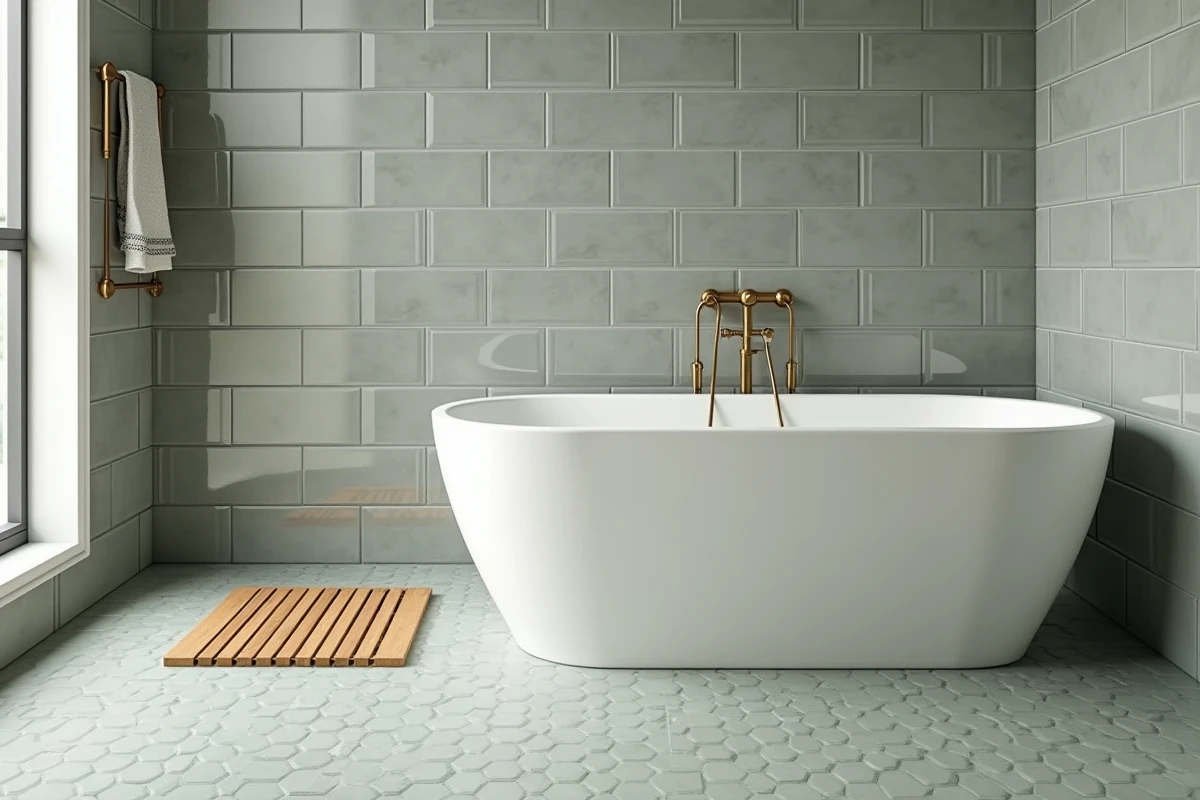
For shower floors, the standard requires a stricter rating than for the rest of the bathroom. Tiles with a polished mirror finish are practically excluded from shower trays and bases. However, they work well as wall coverings, where slip resistance is not an issue and where the reflective effect visually enlarges the room.
Cement tile patterns (in imitation porcelain stoneware) find an interesting place on bathroom walls or as a backsplash. Porcelain stoneware imitations resist moisture without waterproof treatment, which significantly simplifies maintenance compared to a genuine cement tile in this room.
Glossy gray on the bathroom floor remains viable outside the shower area, provided that a format is chosen that limits joints (large formats reduce the number of joints, thus the potential mold areas) and that the slip resistance rating is checked on the product sheet. An experienced tiler will recommend a satin finish rather than polished if the floor regularly receives water.
The choice between glossy, satin, or matte gray, between genuine cement tiles and imitation porcelain stoneware, is not just a matter of taste. Technical constraints, from slip resistance to porosity to installation thickness, determine the longevity of the floor and the level of daily maintenance. Asking the right question to the tiler means requesting the technical sheet before looking at the color chart.