
A patient returns home after a long hospitalization, with persistent redness on the sacrum that no longer blanches under pressure. The home nurse visits twice a day, but between visits, it is the caregiver who manages repositioning, support selection, and skin monitoring. It is during this time, between two care visits, that most pressure ulcers worsen.
Static mattress or alternating pressure mattress: the choice that determines everything else
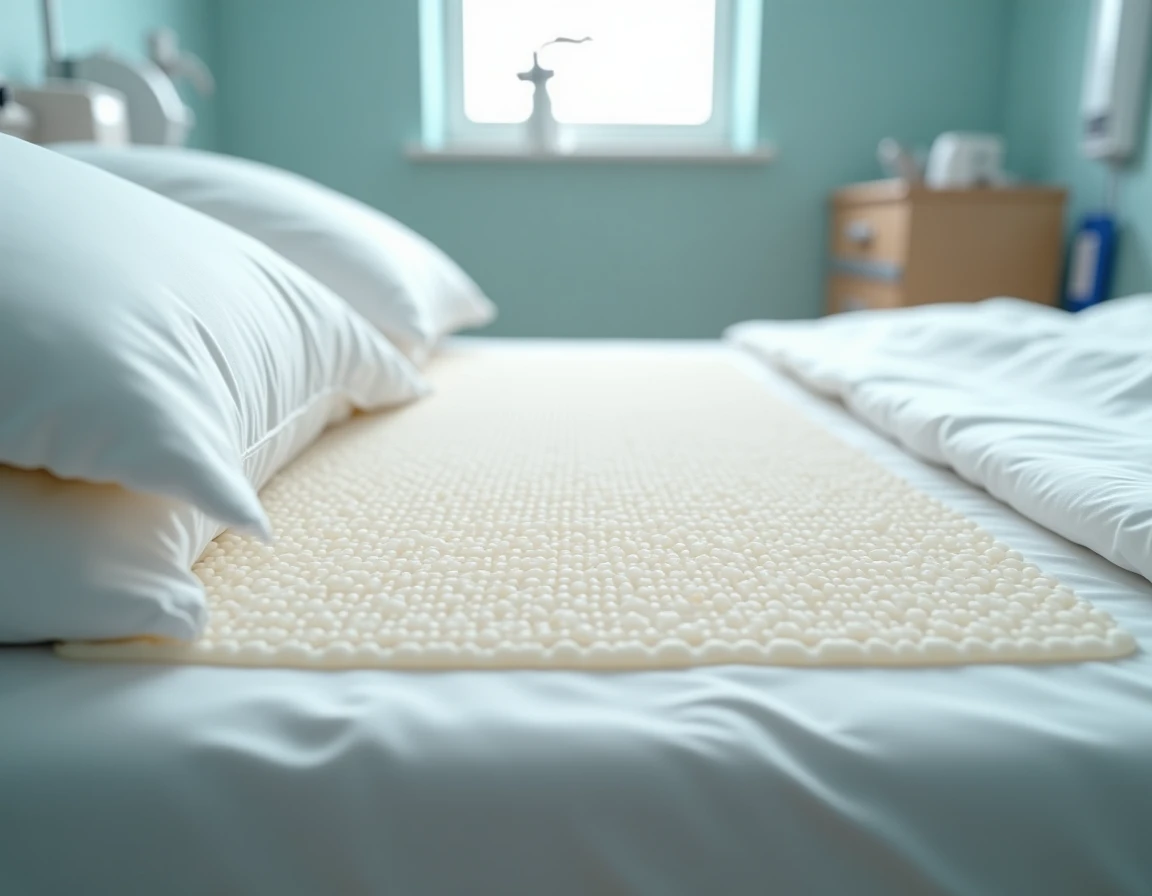
We still too often see patients placed on a standard foam mattress while a stage 2 pressure ulcer is already present. The first instinct, even before discussing dressings, is to assess the support.
Static pressure mattresses (high-density foam, gel, non-motorized air systems) are suitable for prevention or for stage 1 redness. They distribute body weight without mechanical action. To know how to heal and treat pressure ulcers at a more advanced stage, one must move to a higher level.
Alternating pressure mattresses, equipped with motorized pneumatic cells, inflate and deflate areas alternately. This simulated movement boosts blood flow under pressure points. They are indicated from stage 2 and become almost mandatory for stages 3 and 4. Feedback varies on tolerance to compressor noise, but clinically, pressure redistribution is significantly better than with a static support.
Repositioning and skin monitoring: the concrete protocol at home

A good mattress does not eliminate the need for repositioning. Sometimes we hear that the alternating mattress “does the work by itself.” This is false. Changing the patient’s position every two to three hours remains the foundation of prevention, even on a high-end support.
In practice, at home, this means organizing a clear schedule, displayed near the bed, with times and positions (left lateral, right lateral, supine, semi-sitting). The caregiver notes each change. This written tracking allows the nurse to identify any omissions or positions held for too long.
Priority areas to monitor
- The sacrum and buttocks, the first areas affected in patients lying on their backs, especially in prolonged semi-sitting positions in the hospital bed.
- The heels, often neglected even though they bear concentrated pressure on a small bony surface. Specific pressure-relieving cushions exist and are inexpensive.
- The trochanters (hips), involved during lateral positions. A pillow placed between the knees limits contact pressure.
Daily skin monitoring is done during bathing. One looks for redness that does not blanch when pressed with a finger. On dark skin, this redness can be difficult to spot: one then relies on local warmth, induration, or pain reported by the patient.
Dressings and negative pressure therapy: adapting care to the stage of the wound
The choice of dressing directly depends on the stage of the pressure ulcer and the condition of the wound (dry, exudative, infected, necrotic). There is no universal dressing.
Common dressings according to the situation
- Hydrocolloids for shallow, low-exudate pressure ulcers, stages 1 to 2. They maintain a moist environment conducive to healing.
- Alginates or hydrofibers for highly exudative wounds. They absorb excess fluid without drying out the wound bed.
- Dressings with activated charcoal or silver in cases of malodorous wounds or suspected local infection, pending medical evaluation.
For deep stage 3 or 4 pressure ulcers that stagnate despite well-conducted care, portable negative pressure therapy represents a concrete advancement. Ultra-portable devices now allow its use at home, not just in a hospital setting. The principle: a foam dressing connected to a small pump continuously aspirates exudates and stimulates the formation of granulation tissue.
This option remains prescribed by a doctor and supervised by a trained nurse. It does not replace basic care, but it accelerates the healing of deep exudative wounds where standard dressings plateau.
Nutrition and pressure ulcers: an underestimated lever in daily practice
You can have the best mattress and the most rigorous repositioning protocol; if the patient is malnourished, the wound will not heal. Skin tissues need proteins, zinc, vitamin C, and sufficient caloric intake to regenerate.
In practice, in an elderly person at home, malnutrition often sets in quietly. Appetite decreases, meals are simplified, and protein intake drops. Enriching each meal with protein (eggs, cheese, dairy products, oral nutritional supplements prescribed by the doctor) is an integral part of pressure ulcer treatment, just like the dressing.
Hydration also plays a direct role. Dehydrated skin loses elasticity and is less resistant to friction and shear forces during mobilizations.
Managing a pressure ulcer never boils down to a single action. It is the combination of appropriate support, regular repositioning, dressing adjusted to the stage of the wound, and monitored nutritional status that produces results. When one of these four pillars is missing, the wound stagnates or worsens, regardless of the care provided to the other three.