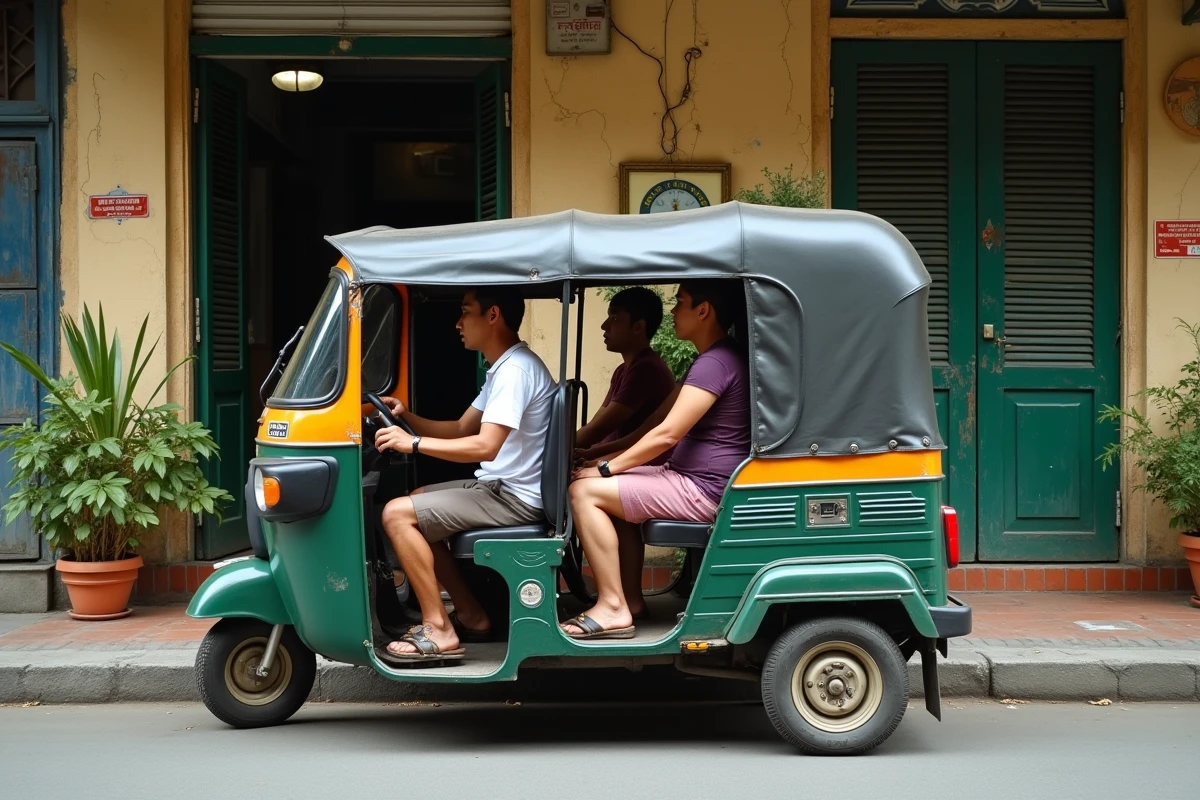
The capacity of a tuk-tuk is not just about counting the seats on a bench. It depends on the chassis, the type of approval, the country of operation, and, for the past few years, the chosen engine type. Here, we detail the technical parameters that truly determine the number of passengers in a tuk-tuk, beyond simplistic answers.
Payload and approval: what determines the actual capacity of a tuk-tuk
The number of passengers allowed in a tuk-tuk primarily derives from its remaining payload after deducting the empty weight. On a classic thermal tricycle, the rear bench typically accommodates two to three adults. This figure is stated on the registration certificate or its local equivalent, and it is this that is authoritative in case of inspection.
In France, the Highway Code (articles R312-1 to R312-4) strictly prohibits the transport of standing passengers, even on a short tourist trip. Exceeding the number of seats listed on the registration certificate exposes the operator to a fine and the immobilization of the vehicle. The same rule applies to a tuk-tuk operated as a VTC or on a tourist circuit.
In India, several states like Maharashtra and Delhi have mandated since 2022 the visible display of the number of passengers in a tuk-tuk inside the cabin, in Hindi and English. Targeted checks for overloading in suburban areas accompany these road safety campaigns. This regulatory tightening reflects a global movement: tolerance for overloading is decreasing, even in countries where it was culturally accepted.

Electric tuk-tuk: why the battery reduces the number of seats
The shift to electric has a direct effect on passenger capacity that many travelers are unaware of. The weight of the batteries reduces the available payload for occupants. Some recent urban models certify their rear bench for only two adults, where a thermal equivalent could accommodate three.
This constraint is not a design flaw. It arises from compliance with the limits of the maximum authorized weight (PTAC): adding a hundred kilos of batteries necessitates removing one passenger to stay within legal limits. We recommend always checking the number of seats on the registration certificate of an electric tuk-tuk before boarding, especially in tourist cities that are renewing their fleets.
Implications for tour operators
An operator replacing their thermal tuk-tuks with electric models must recalculate their offerings. A tour designed for groups of three passengers per vehicle may require an additional tuk-tuk, impacting the price per person and the logistics of the fleet.
Variations by country: Thailand, Cambodia, Sri Lanka
The configuration of the tuk-tuk varies greatly from country to country, along with the number of passengers allowed in practice.
- In Thailand, the Bangkok tuk-tuk has an open rear bench designed for two adult passengers. Three people can squeeze in, but comfort significantly declines, and the driver may refuse.
- In Cambodia, the tuk-tuk is often a trailer hitched to a motorcycle. The double-sided bench allows for four passengers, sometimes more on short trips between Siem Reap and the temples. The rising price of LPG affects the income of Cambodian drivers, prompting some to accept overloading to make each trip profitable.
- In Sri Lanka, the compact three-wheeler rarely accommodates more than two adults in the back. The vehicle’s small size and the winding roads in mountainous areas make any overloading particularly risky.
Vietnam uses the traditional tuk-tuk less, gradually replacing it with cyclo-pousses or electric tour vehicles in historical centers. The capacity rarely exceeds two people.
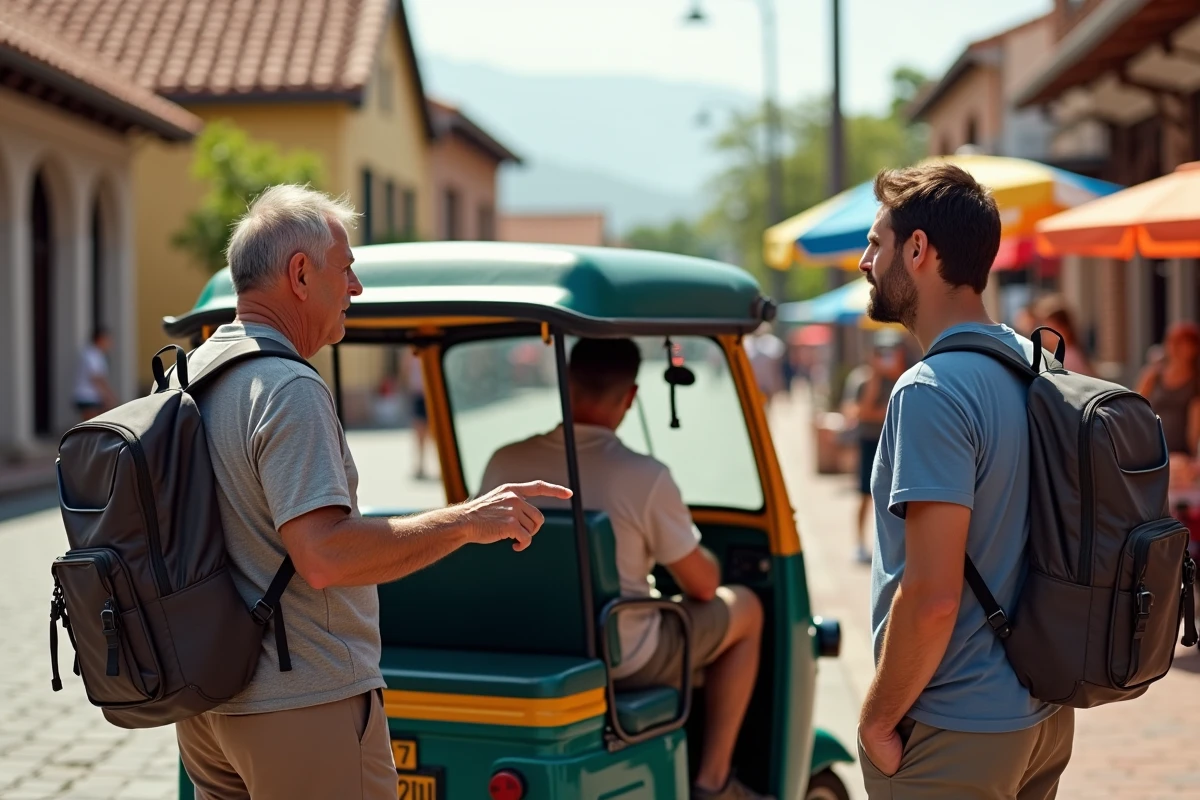
Safety and overloading: the concrete risks to be aware of
An overloaded tuk-tuk alters its road behavior unpredictably. The center of gravity, already high on a tricycle, rises with each additional passenger. The risk of tipping in a turn increases, especially since most tuk-tuks lack seat belts and rollover protection structures.
Braking is also directly affected. The braking systems of a tuk-tuk are designed for its nominal load. Adding one or two passengers beyond the limit significantly extends the stopping distance, especially on wet pavement.
Points to check before boarding
- Check that the number of passengers matches the seats displayed in the cabin or on the vehicle.
- Refuse to board if bulky luggage is already occupying passenger space, as it counts towards the payload.
- Prefer fleets identified by an agency or local operator, which generally comply with vehicle approval standards.
The question of the number of passengers in a tuk-tuk is as much about local regulations as it is about the physics of the vehicle. The most reliable rule remains that stated on the registration certificate, regardless of the country. With the gradual electrification of fleets and the tightening of checks in Asia as well as in Europe, the trend is towards reducing nominal capacities rather than increasing them.