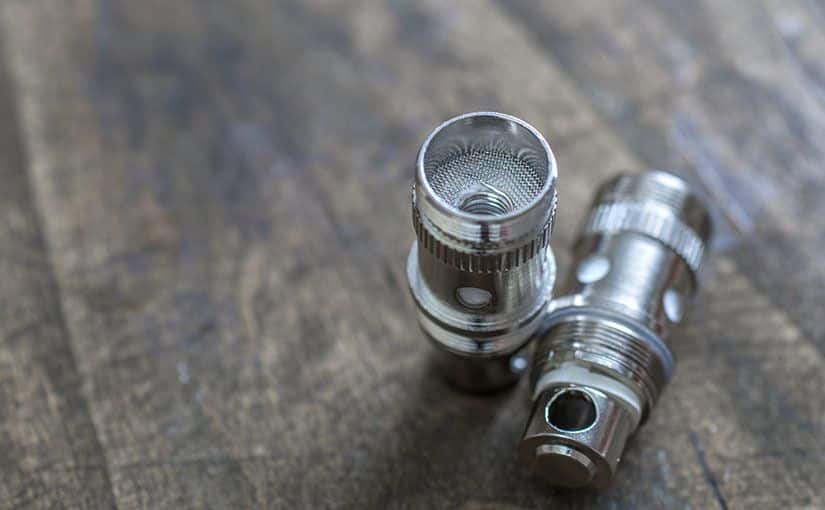
Estimated reading time: 2 minutes The resistance of the clearomizer is one of the most important components of an electronic cigarette. It is responsible for the evaporation of the e-liquid present in the tank. It has two elements: a resistance and a wick soaked in the liquid.
The resistive
The resistance used for electronic cigarette coils generally takes the form of a wire coiled into a coil. It is the number of turns in the coil that defines the resistance value. It can also take the form of a mesh (sector resistance) with a larger heating surface and better flavor recovery.
The more turns there are, the higher the resistance value and the lower the vaping power must be. Different types of metals can be used, such as kanthal, nickel, nichrome, stainless steel, or titanium.
The wick
The resistance wire of a coil wraps around a wick made of absorbent material. Cotton and silica fibers are the most commonly used materials for making resistance wicks.
The role of the wick is to provide the resistance with the amount of e-liquid necessary for evaporation. The resistance wick must therefore be constantly soaked in e-liquid to evaporate properly.
If the resistance is not properly supplied with e-liquid, dry hits and abnormal wear of the resistance will be at risk. For this reason, it is imperative to prime a coil before first use.
Create your own coil
With rebuildable atomizers, it is possible to have custom coils. They are then mounted directly onto the dedicated compartment of the atomizer.
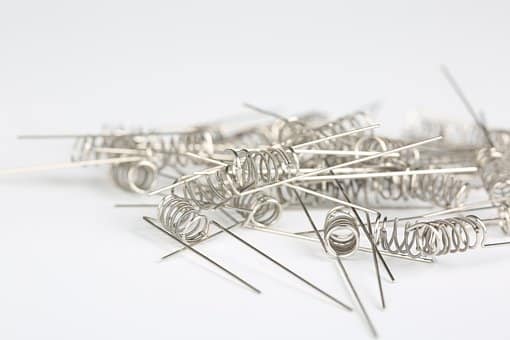
Simply gather the resistance wire and the right cotton wicks to create individual coils that are perfect for enjoyment.
Tag: e-cigarette wick